
When artificial intelligence accelerates cyberattacks
Artificial intelligence is fundamentally changing the cybersecurity landscape. Threat actors are increasingly using AI to discover vulnerabilities, automate attack workflows, and develop new exploitation techniques. Processes that once required days or weeks can now be accelerated dramatically.
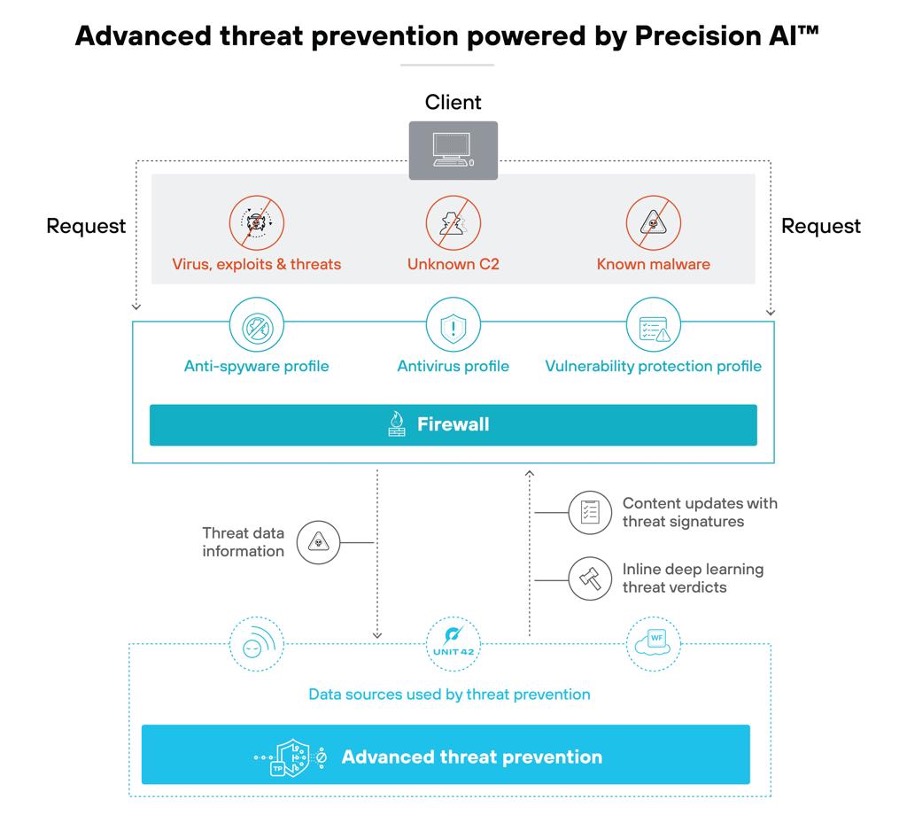
For enterprises, this creates a new challenge: traditional security approaches that primarily rely on known threat signatures, reputation databases, and reactive patch management may not be sufficient on their own.
Organizations need security controls that can identify malicious infrastructure earlier, prevent exploitation attempts, and reduce the time during which vulnerable systems remain exposed.
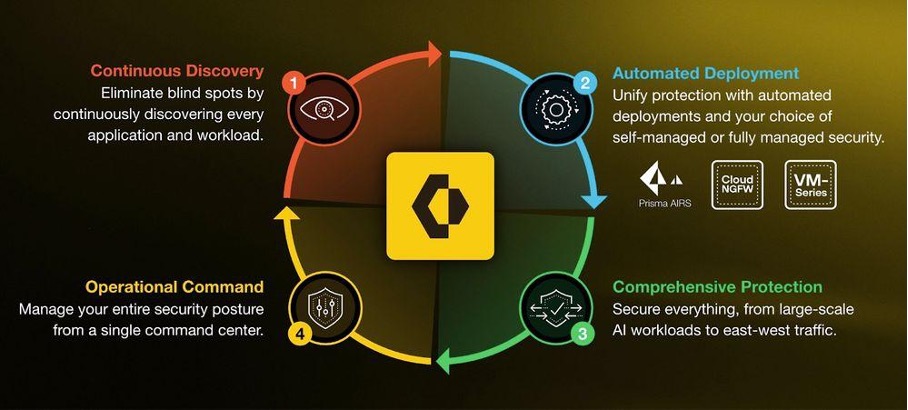
With PAN-OS 12.2, Palo Alto Networks introduces new network security capabilities designed to strengthen prevention in the Frontier AI era.
This article focuses on two key firewall capabilities:
- Advanced IP Defense: Identifying and blocking attacker infrastructure at the network layer.
- Advanced Threat Prevention Plus (ATP Plus) – Frontier Virtual Patching: Providing proactive protection against supported vulnerability exploitation attempts, including threats that emerge before conventional patches become available.
Together, these capabilities represent a shift from primarily reactive detection toward earlier, prevention-focused network security.
1. Advanced IP Defense – Blocking attacker infrastructure
Why traditional IP reputation is no longer enough
Modern attackers increasingly rely on infrastructure designed to evade conventional security controls. Examples include rapidly changing IP addresses, residential proxy networks, compromised devices, and direct-to-IP connections.
Direct-to-IP communication is particularly challenging because it can bypass security checks that depend primarily on DNS lookups or URL inspection. Meanwhile, static blocklists may struggle to keep pace with constantly changing attacker infrastructure.
The result is a growing need for threat intelligence that operates directly at the network layer.
How Advanced IP Defense works
Advanced IP Defense enhances network-layer threat prevention through AI-assisted analysis and global threat intelligence.
According to Palo Alto Networks, the capability leverages global telemetry to identify attacker-controlled infrastructure and block malicious connections in real time.
Its key benefits include:
- Real-time IP-layer threat intelligence: Identifying and blocking communications associated with malicious infrastructure.
- Protection against direct-to-IP attacks: Strengthening defenses when DNS- or URL-based inspection alone may not provide sufficient visibility.
- Improved detection of evolving attacker infrastructure: Using global threat intelligence to help identify emerging malicious endpoints.
- Preventive network enforcement: Enabling the firewall to block unwanted communications when supported threat intelligence and configured security policies identify them as malicious.
Practical use cases
Consider an enterprise endpoint that has been compromised and attempts to communicate with an external command-and-control server. Alternatively, imagine an attacker scanning publicly accessible services from constantly changing IP addresses.
Advanced IP Defense can add another layer of protection by helping the firewall identify and block connections associated with attacker infrastructure.
This capability does not replace network segmentation, application-level inspection, security policies, or logging. Instead, it complements these controls as part of a defense-in-depth strategy.
2. ATP Plus and Frontier Virtual Patching – Protection before conventional patches are deployed

The vulnerability exposure window
One of the most persistent challenges in cybersecurity is the time between discovering a vulnerability and deploying an effective patch.
Developing, testing, approving, and installing software updates can take considerable time, particularly in complex enterprise environments. During this period, vulnerable systems may remain exposed to exploitation attempts.
The challenge is especially significant for internet-facing applications, critical business systems, industrial infrastructure, and environments where downtime is difficult or unacceptable.
AI-assisted attacks can intensify this problem by accelerating vulnerability discovery and exploit development.
What is Frontier Virtual Patching?
Frontier Virtual Patching is a capability introduced through the Advanced Threat Prevention Plus security service. Its objective is to provide proactive protection against supported exploitation attempts before conventional software patches are available or deployed.
Palo Alto Networks describes an approach that combines proactive vulnerability discovery through NOVA (Network and Open-Source Vulnerability Analyzer) with early vulnerability intelligence from its Critical Defense Program. The resulting protections use a mechanism the company calls vaulted protection.
The key distinction from traditional vulnerability management is that protection does not necessarily have to wait for a public vulnerability disclosure or the deployment of a vendor patch.
How virtual patching works at the firewall
Virtual patching does not modify the vulnerable application’s source code or directly repair the operating system. Instead, it applies network security protections to prevent supported exploit traffic from reaching or successfully exploiting the vulnerable service.
The process can be summarized in four stages:
- Proactive vulnerability discovery
Threat research and analysis identify vulnerabilities that may not yet have a publicly available conventional patch. - Protection development
Relevant threat intelligence and supported virtual protections are prepared to identify and block exploitation attempts. - Firewall traffic inspection
The appropriately configured firewall can detect and block traffic attempting to exploit a protected vulnerability. - Ongoing protection updates
Security content updates can deliver additional protections as they become available, reducing the need for manual intervention.
This is a conceptual overview. Actual behavior depends on the supported vulnerability, available security content, firewall platform, software version, and configuration.
Why this matters for enterprise operations
Virtual patching can reduce the exposure of vulnerable systems without requiring an immediate application upgrade or system restart in every case.
This can be particularly valuable for:
- Business-critical applications: Where planned downtime has a significant operational or financial impact.
- Industrial and OT environments: Where software updates require extensive validation and carefully scheduled maintenance windows.
- Internet-facing services: Where attackers may rapidly attempt to exploit newly identified vulnerabilities.
- Complex enterprise infrastructures: Where patch deployment requires coordination between multiple teams, application owners, and technology vendors.
However, virtual patching should not be considered a replacement for permanent remediation. It is an additional protective layer that helps reduce risk while organizations continue to plan and deploy vendor-provided patches.
3. Advanced IP Defense vs. Frontier Virtual Patching
Although both capabilities support the same broader objective—preventing successful attacks—they address different stages of the attack lifecycle.
| Capability | Advanced IP Defense | ATP Plus – Frontier Virtual Patching |
| Primary objective | Identify and block attacker infrastructure | Prevent exploitation of supported vulnerabilities |
| Security focus | IP-layer threat intelligence | Network-based exploit prevention |
| Typical threat | Malicious IPs, attacker endpoints, command-and-control infrastructure | Attempts to exploit known or proactively identified vulnerabilities |
| Prevention approach | Block malicious communications | Block exploit traffic targeting vulnerable services |
| Business benefit | Reduce exposure to attacker-controlled infrastructure | Reduce risk while permanent patches are pending |
Used together, these capabilities can strengthen defense in depth. Advanced IP Defense focuses on the infrastructure behind an attack, while Frontier Virtual Patching focuses on exploitation attempts targeting vulnerable services.
Neither capability eliminates the need for a broader security architecture, but together they can help reduce the opportunities available to attackers.
4. Deployment considerations for PAN-OS 12.2
Introducing new firewall capabilities requires more than enabling a feature. Organizations should evaluate licensing, configuration, performance, and operational readiness.
Key considerations include:
- Licensing and platform support: Confirm the required subscription, supported hardware, and software prerequisites.
- Security policy configuration: Review the relevant Security policy rules and ensure the appropriate threat prevention profiles are applied to the intended traffic.
- Performance testing: Assess throughput, latency, and resource utilization before broad deployment.
- Logging and incident response: Ensure that prevention events are visible to security operations teams and can be investigated effectively.
- Patch management: Continue deploying permanent vendor fixes even when virtual protections are available.
Performance testing is particularly important. Palo Alto Networks documents a performance-related issue affecting certain PAN-OS 12.2 versions when Frontier Virtual Patching is enabled with Advanced Threat Prevention Plus. Administrators should review the applicable release notes and known issues before deployment.
A phased rollout, beginning with selected high-risk traffic and validated through testing, can help organizations balance improved protection with operational stability.
Conclusion: Moving from reactive security to proactive prevention
The Frontier AI era is changing the economics and speed of cyberattacks. As attackers automate more of the attack lifecycle, organizations need security controls capable of responding at a comparable pace.
PAN-OS 12.2 introduces two important capabilities to address this challenge:
- Advanced IP Defense strengthens network-layer protection by identifying and blocking communications associated with attacker infrastructure.
- ATP Plus Frontier Virtual Patching provides proactive network protection against supported exploitation attempts, potentially before conventional software patches are deployed.
When combined with well-designed security policies, network segmentation, logging, and disciplined patch management, these capabilities can help organizations build a more prevention-focused security architecture.
The objective is no longer simply to detect attacks after they begin. It is to reduce the opportunity for attackers to succeed in the first place.
Author
Zoltán Réti
SENIOR NETWORK SECURITY ENGINEER
Related Posts

Think Like an Attacker: Spot the Security Risks
Wi-Fi password posted on the wall ("Office-WiFi / Password: Office123!") Unattended laptop left...
The Extension Threat Vector: Protecting Browsers and Dev Environments?
If your organization doesn’t manage extensions and your users can freely install any browser and...
